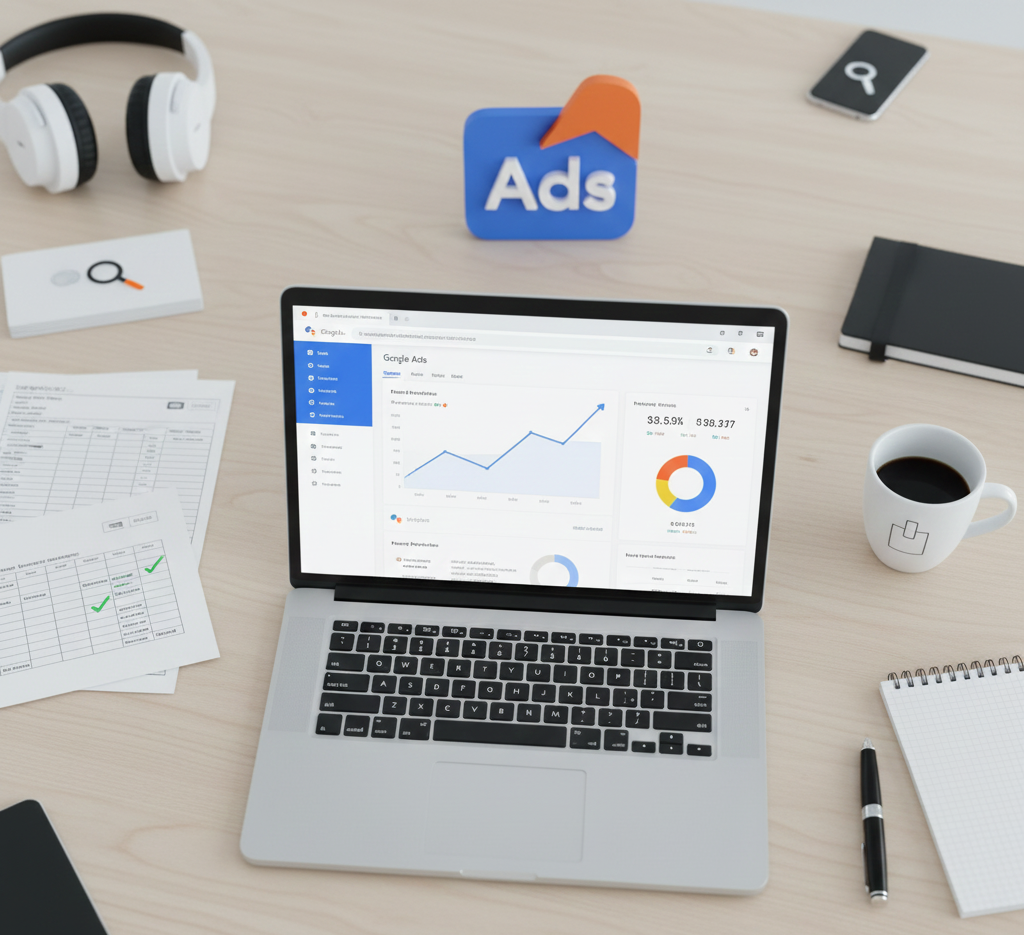
Google Ads has become one of the most powerful tools for businesses that want to increase visibility generate leads and grow consistently. But success isn’t just about launching ads it’s about Google Ads management which means planning, optimizing, measuring, and improving campaigns over time.
This guide breaks down what effective Google Ads management looks like today and what businesses must focus on to achieve strong, profitable results.
What Is Google Ads Management?
Google Ads management is the process of organizing, monitoring and optimizing ad campaigns across Google Search, Display, YouTube, and more. It includes:
Keyword research
Campaign structure planning
Conversion tracking setup
Smart bidding strategy
Continuous optimization
Budget management
Performance reporting
When done correctly, Google Ads management helps businesses reach customers at the right moment — when they are actively searching for solutions.
Why Google Ads Management Matters
Without proper management even good campaigns can waste money. Search behavior changes daily, competition shifts and automatic systems need the right inputs to work effectively.
Strong Google Ads management helps you:
Reduce wasted spend
Increase qualified clicks
Improve conversion rate
Get better returns from your ad budget
Build long-term, stable performance
The goal is not just traffic the goal is profitable traffic.
1. Build a Simple, Clean Account Structure
Modern Google Ads works best with simplified setups. Overly complex structures slow down learning and make smart bidding less effective.
A good structure typically includes:
Fewer campaigns
Clear themes per ad group
Broad keyword coverage
Consistent conversion signals
This gives Google’s AI the freedom to find high-intent users across different search patterns.
2. Use Smart Bidding for Maximum Efficiency
Manual bidding used to be the standard. Today Google Ads management relies heavily on smart bidding strategies such as:
Target CPA
Target ROAS
Maximize Conversions
Maximize Conversion Value
Smart bidding uses real time signals like device type, user behavior and search intent far more than a human can manage manually.
To get the best results:
Provide clean conversion tracking
Allow time for the algorithm to learn
Avoid making too many change too quickly
Consistency improves accuracy.
3. Track the Right Conversion Events
Accurate tracking is the foundation of successful Google Ads management. If the platform can’t see your conversions it can’t optimize correctly.
Essential tracking elements include:
Google Tag Manager
Enhanced conversions
Proper attribution settings
Clear conversion goals
The better your data, the stronger your campaign performance will be.
4. Focus on Search Intent, Not Just Keywords
Keyword match types continue to evolve, with broad match becoming more important in smart bidding systems. The goal is to understand intent, not just specific keyword phrases.
Effective Google Ads management includes:
Grouping keywords by purpose
Observing search term patterns
Adding negative keywords where needed
Using audience signals to improve targeting
This helps ads match with users ready to convert.
5. Monitor Performance Consistently
Daily micro-changes can disrupt learning and lower campaign stability. Instead:
Review data weekly
Analyze trends monthly
Optimize based on meaningful patterns
Good Google Ads management is strategic not reactive.
6. Use Landing Pages That Convert
High performing ads need strong destination pages. A good landing page includes:
Clear headline
Simple message
Fast load time
Visible call-to-action
Mobile friendly design
Even small improvement can lead to major performance gains.
7. Evaluate Profitability With Reliable Metrics
Google Ads data is useful but it must connect to the overall business performance. For this reason businesses monitor
Cost per acquisition (CPA)
Return on ad spend (ROAS)
Total revenue impact
Marketing Efficiency Ratio (MER)
These help determine whether a campaign is truly profitable.
Google Ads Management Is About Strategy, Not Guesswork
Google Ads is always evolving. Automated systems new formats and AI powered features continue to reshape how campaigns work. But one thing remains the same success comes from strong strategy, clean data, simple structure and consistent optimization.
Learn the ideal Meta Commercials strategy for 2025. It uses two straightforward ad initiatives, clips created by creators, evaluating brief eye-catching introductions, and simple ways to make it improve as…
Running Facebook ads in 2025 feels harder than ever. Costs are rising, privacy updates are changing the platform, and brands are fighting for attention. But the surprising truth is this:…